Insights / Tactical Analysis
Tactical AnalysisPressing and the high line: a risk-reward map
ParallaxEdge Research · May 15, 2026 · 8 min read
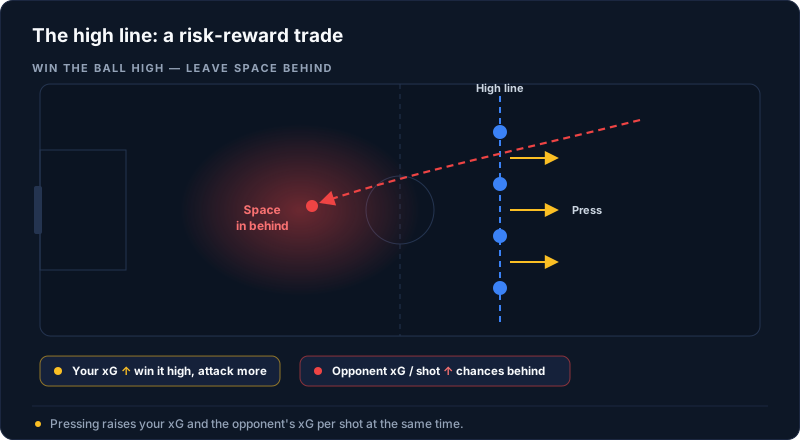
A high defensive line is one of the clearest risk-and-reward decisions a team makes, and it is visible in almost every modern match. Push the back line up the pitch and you compress the space between your defense and your attack, squeeze the opponent into their own half, and win the ball back closer to their goal. The reward is real and immediate. So is the cost, and the cost is a specific, expensive kind of chance.
Start with the reward. When a team defends high and presses, it shortens the distance between winning possession and shooting. Turnovers happen in dangerous areas, the opponent has less time to settle, and the pressing team takes more shots from better positions. In expected-goals terms, the team's own xG rises. It is creating more chances and better ones, because it is hunting the ball where mistakes hurt the opponent most.
Now the cost. A high line leaves space in behind, between the defenders and their own goalkeeper. That space is the single most valuable real estate in the sport. A ball played over the top into it produces a runner bearing down on the keeper with defenders chasing from behind, which is about as high-quality a chance as soccer offers. Crucially, the opponent does not need many of these. Two or three clean balls over the top can outweigh a match-long territorial advantage.
So the high line is not simply good or bad. It is a trade, and we model it as one explicitly. Pressing raises the team's own xG and the opponent's xG per shot at the same time. You attack more and concede less often, but the chances you do concede are sharper. Whether the trade pays off depends on the details.
Personnel decide most of it. The trade rewards center-backs with recovery pace, who can turn and run a striker down before the chance becomes clean, and a goalkeeper comfortable sweeping well off his line to reach balls over the top first. Give a high line to slow defenders and it becomes a series of foot races they are set up to lose. The same tactic can be a strength or a liability depending only on who is executing it.
The matchup matters just as much. A high line against a side that wants to build slowly and keep the ball is low risk, because that opponent rarely plays the direct ball in behind. The same high line against a team with a quick striker and a passer who can find him is high risk, because the opponent is built to punish exactly the space you are offering. Good teams read this before kickoff and set their line accordingly.
Game state shifts the calculation in real time. A team chasing a goal pushes its line higher and accepts more risk in behind, which is why late pressure so often ends in a counterattack the other way. A team protecting a lead drops deeper, surrenders territory on purpose, and removes the space behind that it was willing to risk earlier. The same eleven players run two different versions of the trade across one match.
This is why two teams can both press high and get opposite results. The tactic looks identical on a whiteboard. The outcome depends on recovery pace, a sweeper-keeper, the opponent's directness, and the scoreline, and those inputs are what the model weighs rather than the label on the formation.
For a viewer, the high line is one of the most legible stories on the pitch. Watch where the defensive line sits, and watch whether the opponent has the runners and the passer to go over the top. The reward shows up as sustained pressure and chances created. The cost shows up — when it shows up at all — as a sudden sprint into the space behind. Both are the same decision, seen from its two sides.
Want deeper insights?
Join the waitlist for advanced simulations, full distributions, and model explanations.