Education / Tournaments
Tournaments·6 min read·Beginner
Group-Stage Tiebreakers, Explained
A plain-English guide to how World Cup groups are ranked, how ties are broken, and how the 2026 third-place rule works.
Every World Cup group is a small, self-contained competition, and in 2026 that structure is bigger than ever. The tournament features 48 teams split into 12 groups of four. Within each group, every team plays the other three once, for a total of three group games per team. The scoring is the familiar three-one-zero system: a win is worth three points, a draw is worth one point for each side, and a loss is worth nothing. Add up those points across three games and you have the foundation of the group table, but as you will see, points alone do not always settle who finishes where.
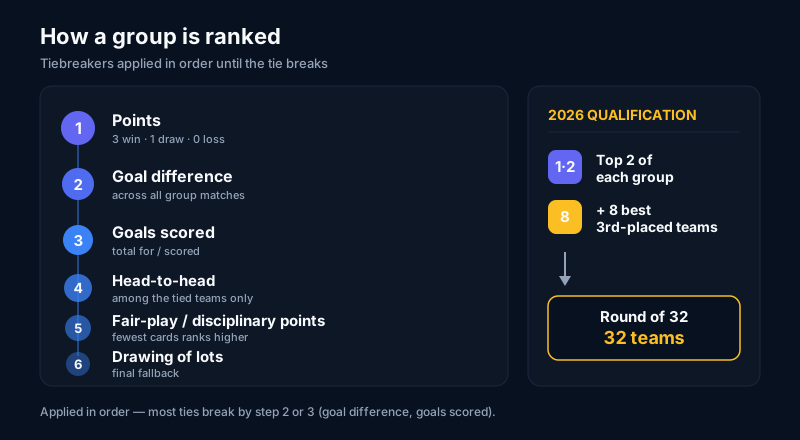
Once the games are played, teams are ranked by a clear hierarchy. The first and most important measure is total points. If two or more teams finish level on points, the next tiebreaker is goal difference, which is simply goals scored minus goals conceded across all three group games. If teams are still tied after that, the next step is total goals scored. These three measures, applied in order, resolve the vast majority of group standings, which is why you will often hear analysts talk about goal difference as if it were a second currency alongside points.
When teams remain perfectly level even after points, goal difference, and goals scored, FIFA turns to a head-to-head comparison among only the tied teams. This mini-table looks at the results of the matches those specific teams played against each other, applying the same logic in sequence: points earned in those games, then goal difference in those games, then goals scored in those games. If a tie still cannot be broken, FIFA moves to fair-play and disciplinary points, where fewer yellow and red cards is better, and as an absolute last resort, the standings are settled by a drawing of lots. That final step is rare, but it exists so that there is always a definitive answer.
Here is where 2026 introduces a genuinely new wrinkle. The top two teams in each of the 12 groups advance automatically, which accounts for 24 teams. But the bracket for this expanded tournament holds 32 teams in the Round of 32, so eight more spots are open. Those go to the eight best third-placed teams across all 12 groups. In other words, finishing third in your group is no longer automatic elimination; it might still be enough to play on, depending on how your record stacks up against the other third-place finishers.
To decide which eight of the 12 third-place teams advance, FIFA compares them against each other using the exact same hierarchy you already know: points first, then goal difference, then goals scored, then disciplinary record, and finally a drawing of lots if needed. Because this is a comparison across different groups rather than within one, a team can sneak through with a fairly modest record, and the specific groups the surviving third-place teams come from determine how they slot into the bracket and who they play next. A single extra goal in an otherwise quiet game can be the difference between flying home and reaching the knockout rounds.
This is exactly why tiebreakers matter analytically rather than as trivia. Because goal difference and goals scored sit so high in the ranking order, every goal carries weight well beyond the result of a single match. A team that has technically secured advancement may still have a powerful reason to keep attacking, because padding its goal difference or goal tally could lift it above a rival, either for a higher group seeding or for one of those precious third-place spots. A good analytics model treats a “decided” game as anything but finished, accounting for the real incentive teams have to keep pressing, and that is the kind of hidden context that separates understanding the table from simply reading it.
Want the full Learning Center?
Join the waitlist for premium guides, worked examples, and downloadable reference sheets.